


The American Kennel Club (AKC) has officially welcomed three new breeds into its ever-growing registry, giving dog lovers even more options when searching for the perfect canine companion. While these breeds are far from “new” in history, they’ve now reached the population and organizational milestones required for full AKC recognition.
With their addition, the AKC now recognizes 205 dog breeds, and each of these newcomers brings something unique to the table.
“Each of these three breeds is unique, giving prospective dog owners even more options to find the right dog for them,” said Gina M. DiNardo, President and CEO of the American Kennel Club.
Recognition means these breeds can now fully participate in AKC-sanctioned conformation shows—like the Westminster Kennel Club Dog Show—as well as thousands of performance and companion events across the country.
Let’s take a closer look at the three breeds officially joining the ranks.

Basset Fauve de Bretagne
Also known as the Fawn-Colored Brittany Basset, this medium-sized scent hound hails from France, with roots dating back to the 1500s. Originally bred for hunting a wide variety of game, the Basset Fauve de Bretagne is known for its determination, intelligence, and cheerful demeanor.
One of the breed’s standout features is its coarse, wiry coat, which naturally repels dirt and resists matting—making grooming relatively low maintenance with weekly brushing. Today, these dogs thrive as active family companions and do best with regular exercise, including at least a couple of brisk walks each day.

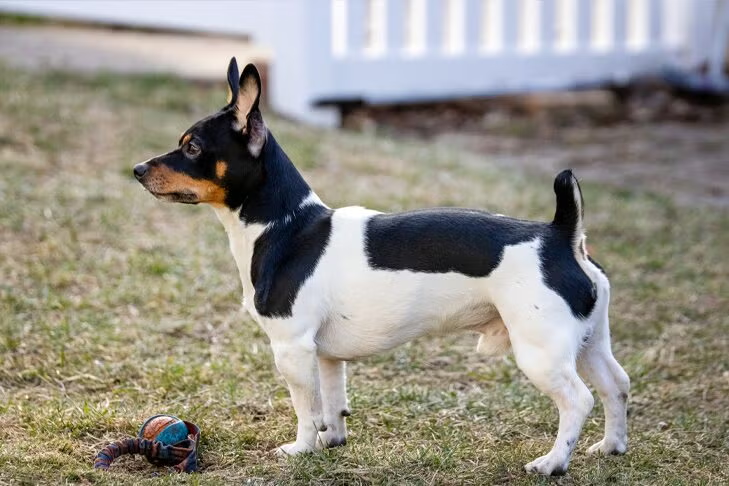
Teddy Roosevelt Terrier
Developed in the United States, the Teddy Roosevelt Terrier has a strong working-class background. Originally bred to control vermin on farms and homesteads, this small-to-medium-sized terrier is athletic, alert, and highly capable.
Despite their working roots, Teddy Roosevelt Terriers are known for being friendly, affectionate, and people-oriented. They require consistent exercise and mental stimulation and still carry a protective instinct that makes them devoted companions. Their versatility allows them to excel in a variety of dog sports while remaining excellent family dogs.

Russian Tsvetnaya Bolonka
Joining the AKC’s Toy Group, the Russian Tsvetnaya Bolonka is a small breed with a big personality. Originating in Russia, these dogs are prized for their affectionate nature, intelligence, and deep loyalty to their families.
While their coats require frequent brushing to stay in top shape, Bolonkas don’t demand large amounts of exercise, making them well-suited for apartment living. They’re often excellent with children and other dogs and tend to form strong bonds with their owners.
What AKC Recognition Means
Although none of these breeds are newly developed, full AKC recognition means they’ve reached a stable population in the U.S. and met all organizational requirements. As a result, all three breeds are now eligible to compete in any of the AKC’s 26,000 events held annually, spanning conformation, performance, and companion sports.
For dog enthusiasts, breeders, and prospective owners alike, this milestone offers greater visibility, support, and opportunity to learn about breeds that may have previously flown under the radar.
To explore these breeds—or any of the 205 officially recognized by the AKC—visit the American Kennel Club’s website and take the time to research which dog truly fits your lifestyle.
Thinking one of these newly recognized breeds might be your next dog? Drop your thoughts, questions, or experiences in the comments—we’d love to hear what caught your eye.
Disclaimer
The information provided in this article is intended for general educational purposes only and should not replace guidance from a veterinarian, certified dog trainer, behavior consultant, or other qualified dog professional. Every dog and situation is unique—professional support is always recommended when addressing health, behavior, or training concerns.
Continue Learning with Us
Want to go deeper? Uncensored Dog members get access to premium articles, training plans, videos, and tools designed for real-life dog training and everyday challenges.