

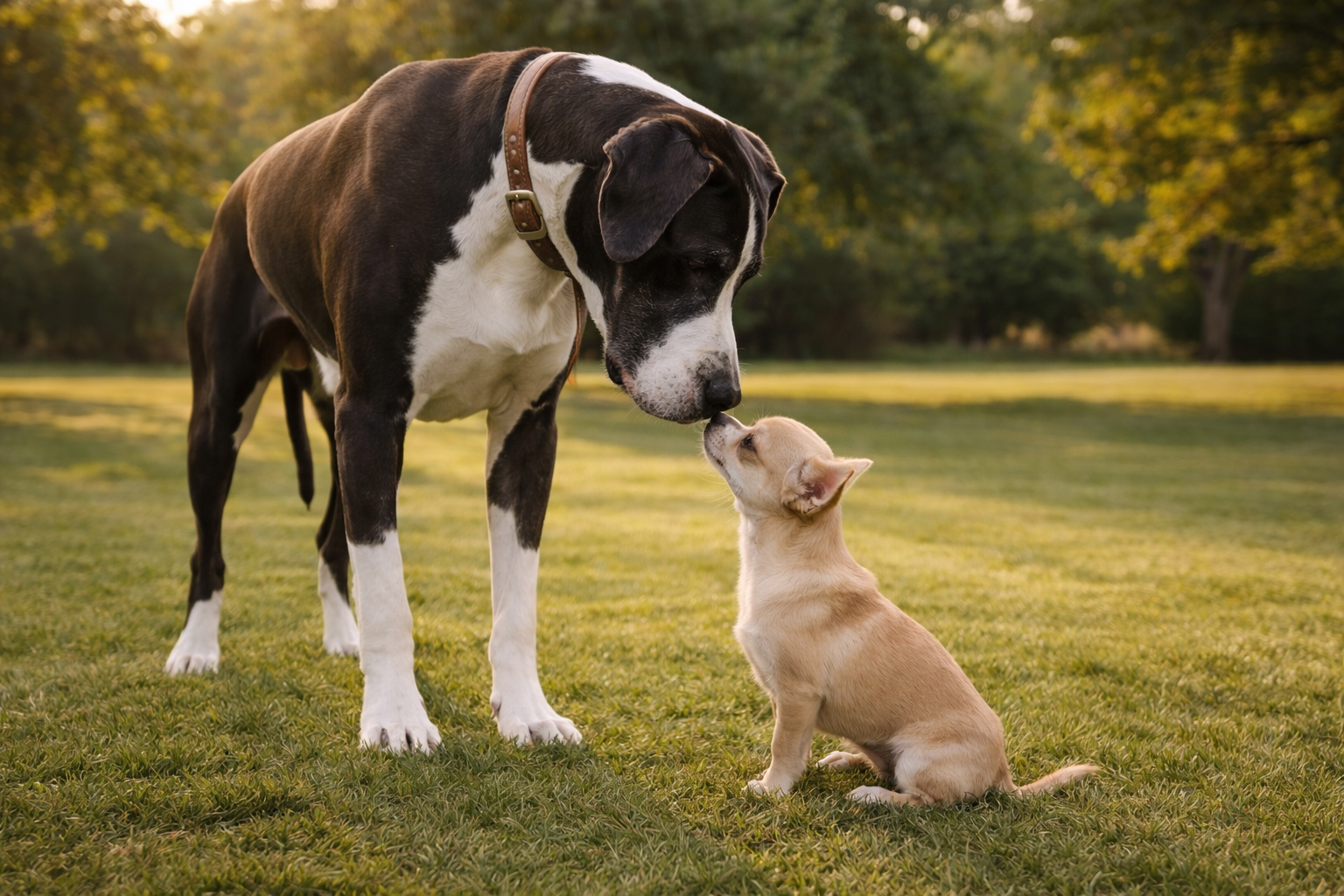
It’s one of the most common questions dog owners ask—especially when raising a puppy:
“How big is my dog going to get?”
Whether you’re watching paws grow overnight or wondering if your “small” puppy is about to surprise you, the answer can feel confusing. Feeding charts, online calculators, and well-meaning advice often add to the uncertainty. The truth is simpler—and more science-based—than many people realize.
Genetics Decide Size, Not Food
Let’s clear up one of the biggest myths first:
Overfeeding does not make a dog grow bigger.
Your dog’s adult size—including height, bone structure, and overall frame—is determined almost entirely by genetics. Feeding more food will not make a dog taller or structurally larger; it simply adds extra weight. That weight is not muscle or healthy growth—it’s excess fat.
Overfeeding can lead to:
- Excess weight and obesity
- Increased strain on joints and ligaments
- Higher risk of orthopedic and mobility issues
- Long-term health complications
While food is essential to support normal growth, it cannot change genetic potential. Feeding a puppy more than they need won’t make them “grow bigger” in a healthy way. Instead, it often causes rapid, unbalanced growth, obesity, and joint or bone problems—especially in large and giant breeds.
Appropriate, measured feeding allows puppies to grow at a steady, healthy pace and reach the size their genetics intended, without unnecessary stress on their developing bodies.

Why Genetics Matter So Much
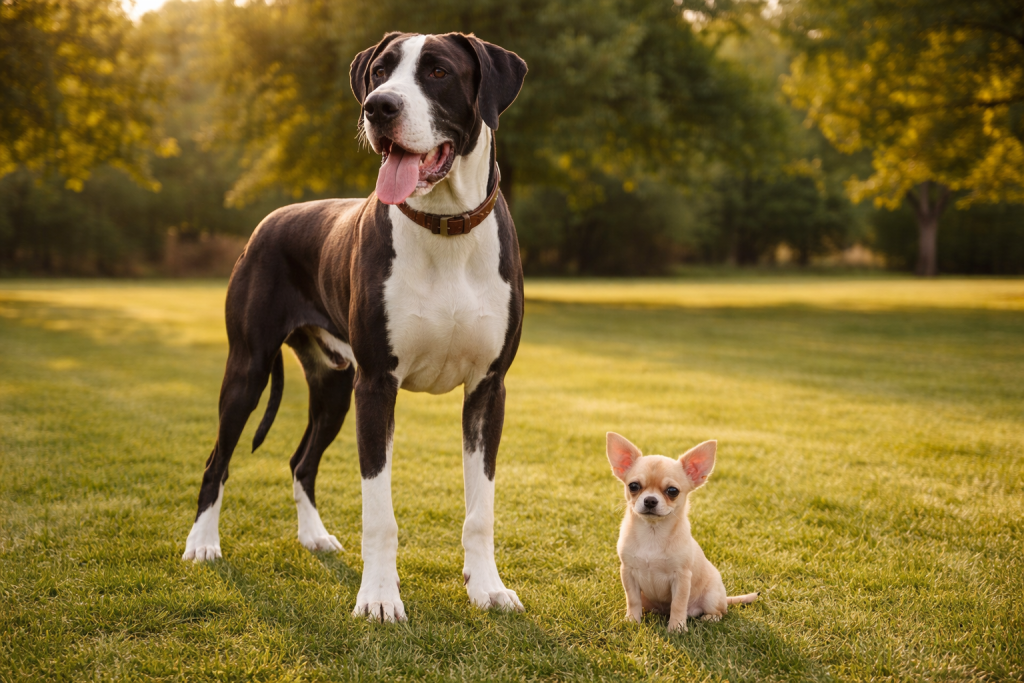
Your dog’s size is influenced by more than just their parents—it’s shaped by generations of genetic history.
Key Genetic Factors That Influence Size
- Parental size: The most obvious indicator
- Extended lineage: Grandparents and earlier generations matter
- Breed standards: For purebred dogs, size ranges are often well established
- Mixed genetics: Mixed-breed dogs may express traits from any part of their lineage
This is why two dogs from the same litter can sometimes mature differently—genes don’t always express evenly.
Why Meeting the Parents Matters
When purchasing a puppy, meeting the parents is one of the best predictors of adult size and structure.
Seeing the parents helps you assess:
- Height and overall build
- Bone density
- Proportions
- Temperament and movement
A responsible breeder should be transparent about the parents and the typical size range produced in their lines. This isn’t just about size—it’s about understanding what kind of dog you’re bringing into your life long-term.
Puppies Should Grow Slowly—Not Be “Bulky”
Another common misconception is that puppies should be thick, round, or “filled out.”
In reality:
- Puppies should look lean, not chunky
- You should be able to feel ribs easily
- Growth should be steady, not rapid
This is especially critical for large and giant breeds. Forcing rapid growth through excess calories increases the risk of joint disorders, uneven development, and mobility issues later in life.
Slow, controlled growth supports stronger bones and healthier joints.
What Does Food Affect?
While food doesn’t change size, it absolutely affects body condition.
Proper nutrition helps:
- Support healthy bone development
- Maintain ideal muscle tone
- Protect joint health
- Regulate energy and digestion
Overfeeding, on the other hand, leads to dogs becoming overweight—not oversized. A heavier dog is not a bigger dog; they’re simply carrying more stress on their body.
Mixed-Breed Dogs: A Bit More Guesswork
With mixed-breed dogs, size prediction can be less precise—but genetics still rule.
Indicators include:
- Paw size relative to body
- Bone thickness
- Growth rate in the first few months
- DNA testing (which can offer estimates, not guarantees)
Even then, mixed dogs may land anywhere within their genetic range, not necessarily the average.
When Will My Dog Stop Growing?
This varies by size:
- Small breeds: Often mature by 9–12 months
- Medium breeds: Around 12–15 months
- Large breeds: 18–24 months
- Giant breeds: Up to 2–3 years
Height usually stabilizes first, with muscle and body composition continuing to mature afterward.
Puppy Growth Chart By Percentage
These numbers are general guidelines—your veterinarian can help if you’re unsure.
| Small (0-20 lbs) | Medium (21-50 lbs) | Large (51-100 lbs) | X-Large (100+ lbs) | |
| 6 months | 75% fully grown | 66% | 60% | 50% |
| 9 months | 90% | 85% | 75% | 65% |
| 12 months | 100% | 95% | 85% | 80% |
| 15 months | 100% | 100% | 95% | 90% |
| 18 months | 100% | 100% | 100% | 95% |
| 24 months+ | 100% | 100% | 100% | 100% |
The Bottom Line
If you’re wondering how big your dog will get, the answer isn’t in the food bowl—it’s in their DNA.
You can’t feed a dog into being bigger than their genetics allow, but you can feed them into being unhealthy. The goal isn’t maximum size—it’s healthy structure, sound joints, and a body condition that supports a long, active life.
Understanding this helps set realistic expectations and keeps your dog healthier at every stage.
Did your dog end up bigger or smaller than you expected? Share your experience in the comments—especially if genetics surprised you. 🐾
Disclaimer
The information provided in this article is intended for general educational purposes only and should not replace guidance from a veterinarian, certified dog trainer, behavior consultant, or other qualified dog professional. Every dog and situation is unique—professional support is always recommended when addressing health, behavior, or training concerns.
Continue Learning with Us
Want to go deeper? Uncensored Dog members get access to premium articles, training plans, videos, and tools designed for real-life dog training and everyday challenges.