

It’s one of the most common questions dog owners ask—and for good reason. Feeding too little can leave a dog undernourished, while feeding too much can quietly create long-term health problems. Bags of dog food offer guidelines, friends offer opinions, and your dog… well, your dog always acts hungry.
So how do you actually know if you’re feeding your dog enough?
The answer isn’t just in the measuring cup—it’s in your dog’s body, age, and overall condition.
Start With the Body Condition Score (BCS)
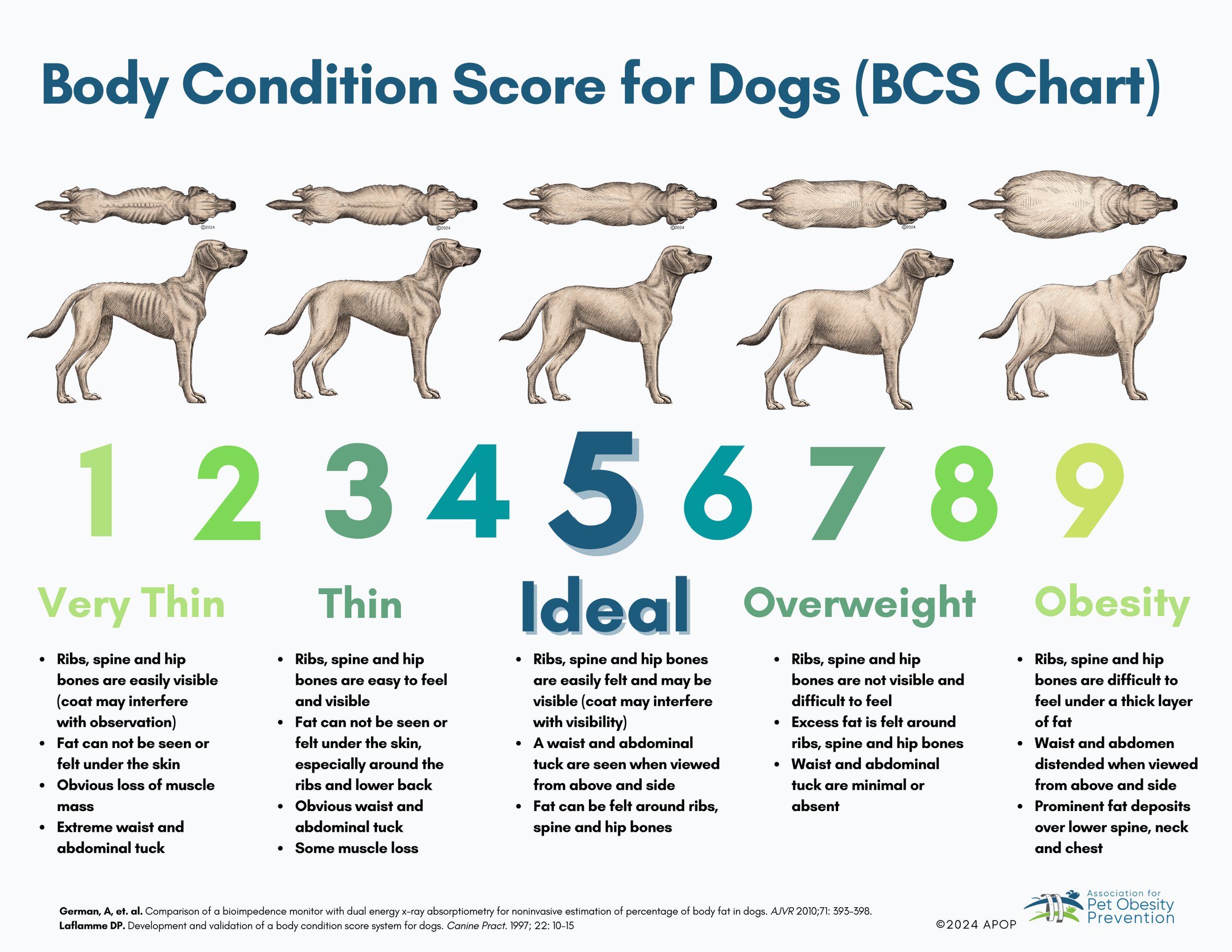
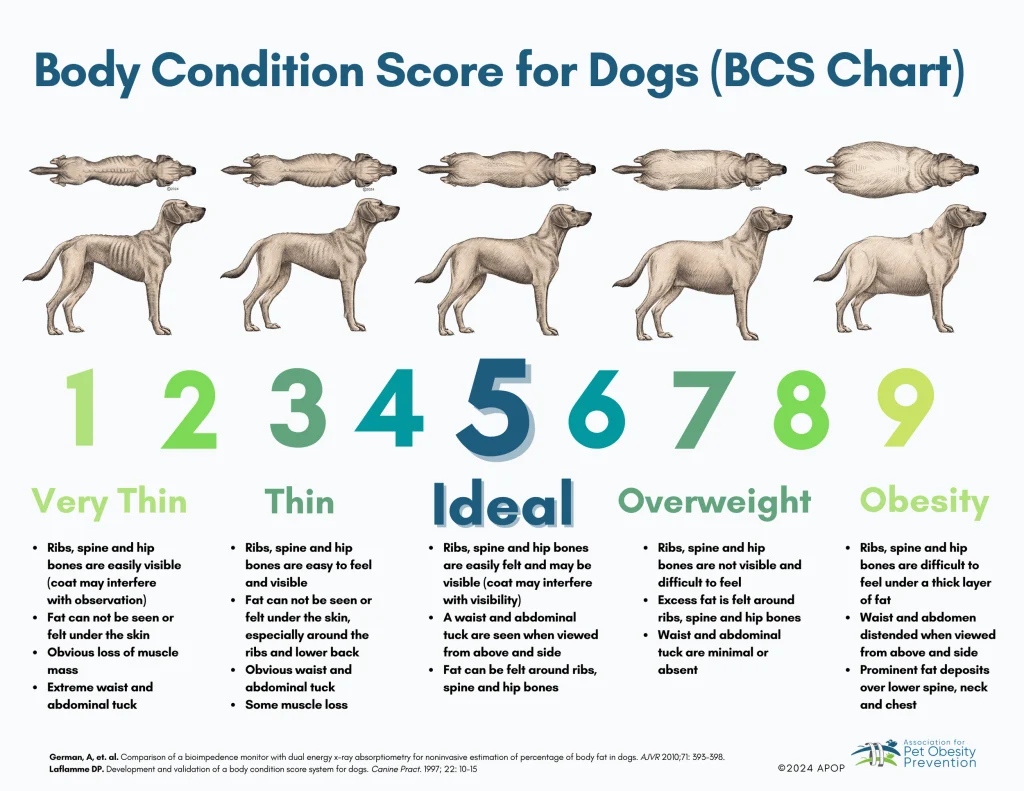
One of the most reliable ways to assess whether your dog is being fed appropriately is by using a Body Condition Score (BCS). This is a visual and hands-on assessment of body fat and muscle.
On a 1–10 scale, the goal for most dogs is a #5: Ideal.
What a #3 (Ideal) Dog Looks Like
- Ribs are easily felt but not visibly protruding, and they can typically be seen if dog is breathing deeply
- A visible waist when viewed from above
- A tucked-up abdomen when viewed from the side
- No excess fat over the shoulders, ribs, or base of the tail
What the Other Numbers Mean
- 1–4 (Underweight): Ribs, spine, or hips are visible; little body fat
- 6-10 (Overweight): Ribs hard to feel; no waist; excess fat deposits
If you have to press hard to feel ribs—or can’t feel them at all—your dog is likely being overfed, even if the food itself is high quality.
Why “More Food” Isn’t Always Better—Especially for Puppies
It’s a common misconception that growing dogs need to be “bulked up.” In reality, feeding puppies too much—especially large and giant breeds—can be harmful.
Overfeeding young dogs can:
- Put excess stress on developing joints
- Increase the risk of orthopedic conditions
- Contribute to uneven growth and long-term mobility issues
Slow, steady growth is healthier than rapid weight gain. Puppies should look lean, not chunky—even though round puppies may look cute.
Adult Dogs and the Obesity Creep
For adult dogs, overfeeding often happens gradually. A few extra calories a day doesn’t seem like much—but over time, it adds up.
Excess weight increases the risk of:
- Joint disease and arthritis
- Heart and respiratory issues
- Diabetes and metabolic disorders
- Decreased stamina and lifespan
If your dog has become less active, been spayed or neutered, or is aging, their calorie needs may be lower than they used to be, even if their appetite hasn’t changed.

Can Feeding Too Much Cause Stomach Issues?
Yes—and this surprises a lot of owners.
Overfeeding can lead to:
- Loose stools or diarrhea
- Gas and bloating
- Vomiting or inconsistent digestion
If your dog frequently has soft stools or digestive upset, it’s not always a food quality issue—it may simply be too much food at once or too many calories overall.
Portion control and consistency matter just as much as ingredients.
Why Feeding Guidelines Aren’t One-Size-Fits-All
The feeding chart on a bag of dog food is a starting point, not a rule.
Calorie needs vary based on:
- Age
- Breed and size
- Activity level
- Metabolism
- Neuter/spay status
- Overall health
Two dogs of the same weight can need very different amounts of food. That’s why watching your dog’s body condition is more accurate than strictly following a chart.
Signs Your Dog Is Being Fed Enough
Your dog is likely getting the right amount if:
- They maintain an ideal body condition
- Energy levels are steady and appropriate
- Stool quality is consistent and well-formed
- Coat and skin look healthy
- Weight stays stable over time
Begging, counter-surfing, or “acting hungry” doesn’t automatically mean your dog needs more food—many dogs are opportunistic eaters by nature. It’s worth remembering that bigger doesn’t mean stronger or healthier, even when it comes to guardian breeds.
The Bottom Line
Feeding your dog enough isn’t about filling the bowl—it’s about supporting long-term health.
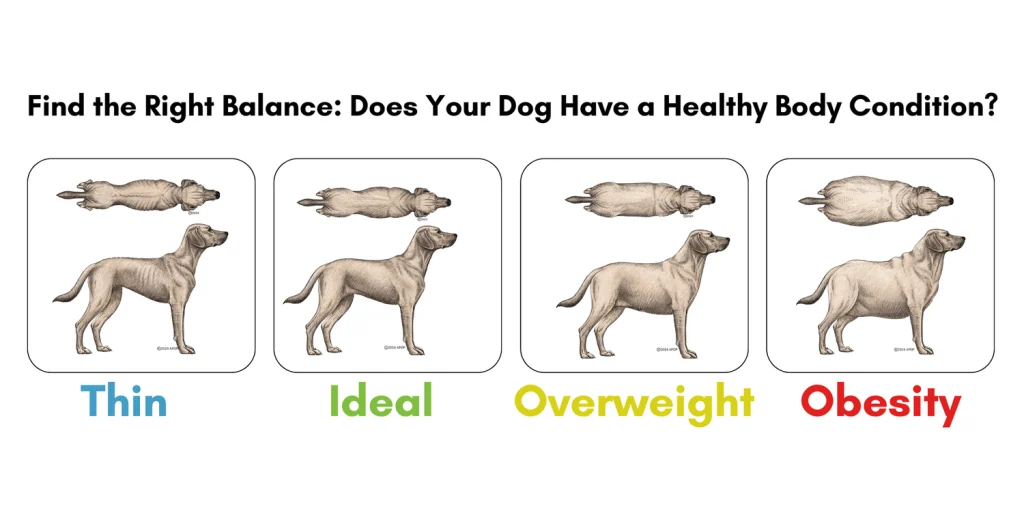
Aim for an ideal body condition (#5 on a 1–10 scale), adjust portions as your dog grows and ages, and remember that more food isn’t always kinder. In fact, appropriate portions are one of the biggest gifts you can give your dog.
If you’re unsure, your veterinarian can help you evaluate body condition and calorie needs—but your hands, eyes, and consistency are powerful tools, too.
Have you ever adjusted your dog’s portions and noticed a big difference? Drop your experience or questions in the comments—your insight could help another owner figure it out. 🐾
References: Association for Pet Obesity Prevention
Disclaimer
The information provided in this article is intended for general educational purposes only and should not replace guidance from a veterinarian, certified dog trainer, behavior consultant, or other qualified dog professional. Every dog and situation is unique—professional support is always recommended when addressing health, behavior, or training concerns.
Continue Learning with Us
Want to go deeper? Uncensored Dog members get access to premium articles, training plans, videos, and tools designed for real-life dog training and everyday challenges.