

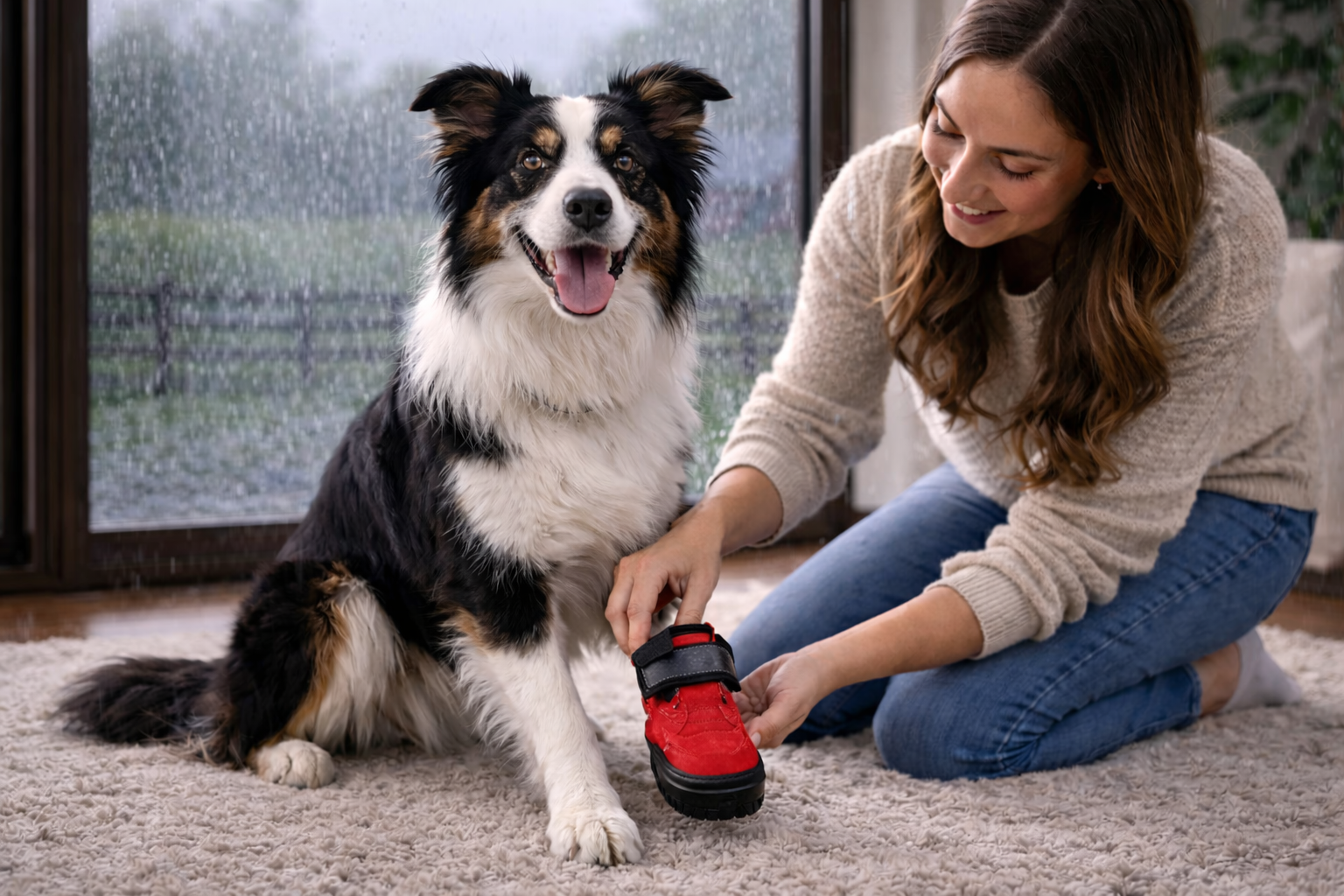
Your dog’s paws do a lot of work. They absorb impact, regulate temperature, provide traction, and allow your dog to move confidently through the world. Whether your dog is navigating icy sidewalks, hot pavement, rocky trails, or salted winter roads, paw protection plays a major role in overall health and mobility.
Dog boots aren’t just a seasonal accessory—they’re a practical tool that can prevent injury, improve comfort, and help your dog stay active in challenging conditions. The key is choosing the right boots and taking the time to help your dog adjust to wearing them.
Why Paw Protection Matters More Than You Think
A small paw injury can quickly turn into a big problem. Cracked pads, burned skin, torn nails, or chemical irritation can limit movement, reduce activity, and lead to infection if left untreated. As a simple guideline, if a surface would be painful or unsafe for you to walk on barefoot, it’s likely uncomfortable for your dog as well – when it doubt, test it out with your own foot.
Well-designed dog boots help protect paws by:
- Shielding against extreme temperatures, including ice, snow, and hot pavement
- Reducing the risk of cuts, abrasions, and torn nails on uneven or rocky terrain
- Protecting against road salt, deicers, and other chemicals
- Providing cushioning and insulation for comfort
- Improving traction on slick or unstable surfaces
Boots aren’t the only option for paw care—regular nail trimming and paw balms can also help maintain healthy paws and pads—but boots offer a reliable layer of protection when conditions are harsh.
Choosing the Right Boots for Your Dog’s Needs
Not all dog boots are created equal. The best option depends on what you plan to use them for and how active your dog is.
Matching Boots to Activities
- Everyday walks and hot pavement: Lightweight, flexible boots that conform to your dog’s paw shape work best. Breathable materials help prevent moisture buildup and irritation.
- Snow, ice, and winter weather: Look for boots with insulation, water resistance, textured soles for traction, and secure closures to keep snow and cold out.
- Hiking and rugged terrain: More durable boots with textured soles and added traction help protect against sharp rocks, uneven ground, and slipping.
- Rainy or muddy conditions: Waterproof boots made from rubber or similar materials can double as rain protection and keep paws clean.
Understanding your goals—whether it’s daily neighborhood walks or long outdoor adventures—will help narrow your options.

Key Features to Look For in Dog Boots
Because there’s no universal “perfect” boot, small design details matter. Features worth considering include:
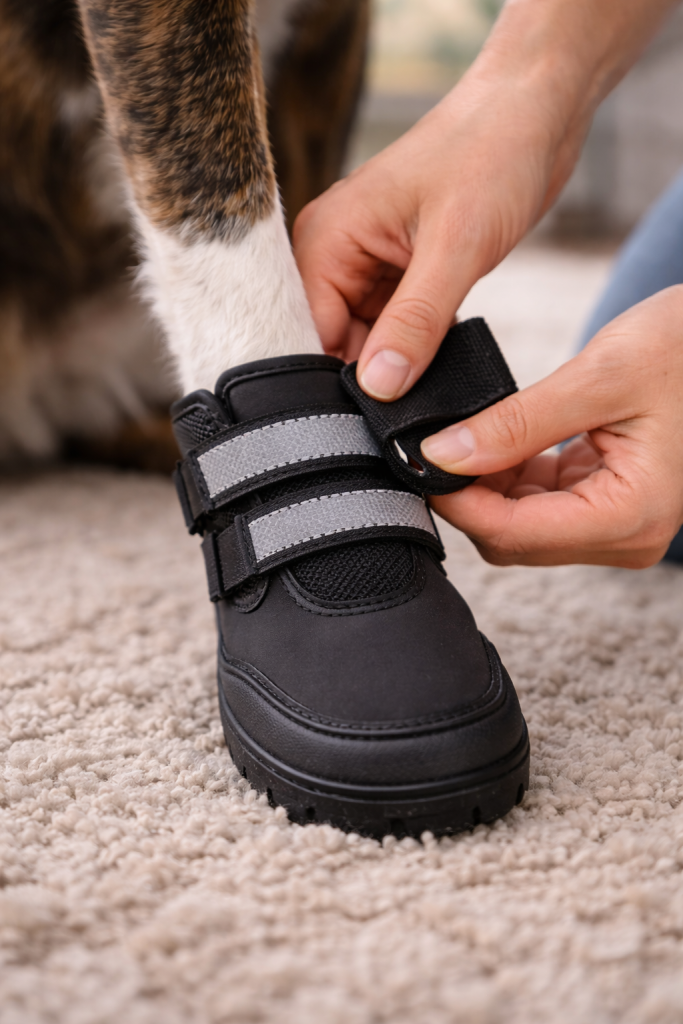
- Secure closures: Velcro straps or adjustable fasteners make boots easier to put on while keeping them snug.
- Traction: Grooved or textured soles improve grip on slick or uneven surfaces.
- Water resistance: Materials that repel moisture prevent trapped water, trapped water can lead to skin irritation or infections.
- Breathability: Especially important for warm weather use.
- Insulation: Cold-weather boots with lining help protect against frostbite.
- Reflective elements: Useful for visibility during early mornings or dark winter evenings.
- Disposable paw covers: Single-use rubber covers can be helpful for short outings when convenience matters.
The right combination depends on your dog’s size, coat type, activity level, and environment.
Getting the Fit Right
Fit is one of the most important—and most overlooked—parts of successful boot use.
To measure your dog’s paw:
- Place their paw on a sheet of paper while standing.
- Trace around the paw, accounting for natural splay.
- Measure the widest part of the tracing.
- Compare measurements to the manufacturer’s sizing chart.
Once you have the boots, do a test fit indoors. Make sure the boots:
- Stay on when your dog walks
- Don’t twist or slide
- Don’t rub or pinch around the leg
- Allow natural movement
If your dog frequently slips out of a boot or seems uncomfortable, sizing or style may need adjustment.
Helping Your Dog Get Comfortable Wearing Boots
Most dogs don’t love boots right away—and that’s normal. The sensation changes how their paws feel the ground, which can be confusing at first. Positive training and acclimation make all the difference.
Training your dog to wear boots is no different than training it to sit. It takes repetition, reward, and practice. Don’t expect them to be OK with boots on the first try.
Start Indoors and Go Slowly
Begin by letting your dog sniff and investigate the boots. Pair this with praise and treats to build positive associations.
Put one boot on a single paw and reward and praise immediately (we recommend the front feet to start). If your dog takes a step or two, reward and praise. Repeat. Once your dog is relaxed with one boot, add another boot, continuing to reinforce calm behavior. Keep initial sessions short—just a few minutes—and gradually increase the duration.
If your dog paws at the boots or looks awkward, don’t correct or scold. Redirect with a command, toy, or treat and keep the experience upbeat and fun.
Transitioning to Outdoor Use
Once your dog moves comfortably indoors, start practicing outside in quiet areas. Early outdoor sessions should be brief—five minutes is plenty.
Bring treats and reward normal walking and relaxed behavior. If your dog pauses to fuss with the boots, gently encourage movement and redirect attention rather than forcing them forward.
Over time, increase walk length and expose your dog to different surfaces. With repetition, most dogs stop noticing the boots altogether, and some look forward to their boots because they know it means a fun adventure is coming.
Consistency Builds Comfort
Patience is essential. Some dogs adjust quickly; others take weeks. The key is consistency.
- Practice regularly
- Use positive reinforcement
- Recheck fit if resistance continues
- Increase duration gradually
Once your dog is comfortable, make boots part of your routine rather than an occasional item. Using them consistently prevents resistance from resurfacing.
Adding a verbal cue like “boots” or “shoes” can also help your dog anticipate what’s coming—and associate it with something positive.
Preparing for Outdoor Adventures
Boots are just one part of keeping your dog safe outdoors. For longer walks or hikes, preparation matters.
Consider bringing:
- Fresh water and a portable bowl
- A canine first-aid kit with bandages and paw-care supplies
- Paw balm for extra protection
- Breaks to check paws and comfort levels
Being proactive helps prevent small issues from turning into bigger problems.
Final Thoughts
Dog boots are a practical tool—not a fashion statement. When chosen carefully and introduced properly, they can protect your dog’s paws, support mobility, and allow them to enjoy the outdoors safely in all seasons.
With thoughtful selection, gradual training, and consistent use, boots become just another normal part of your dog’s gear—helping them stay comfortable, confident, and protected wherever your adventures take you. 🐾
Disclaimer
The information provided in this article is intended for general educational purposes only and should not replace guidance from a veterinarian, certified dog trainer, behavior consultant, or other qualified dog professional. Every dog and situation is unique—professional support is always recommended when addressing health, behavior, or training concerns.
Continue Learning with Us
Want to go deeper? Uncensored Dog members get access to premium articles, training plans, videos, and tools designed for real-life dog training and everyday challenges.