

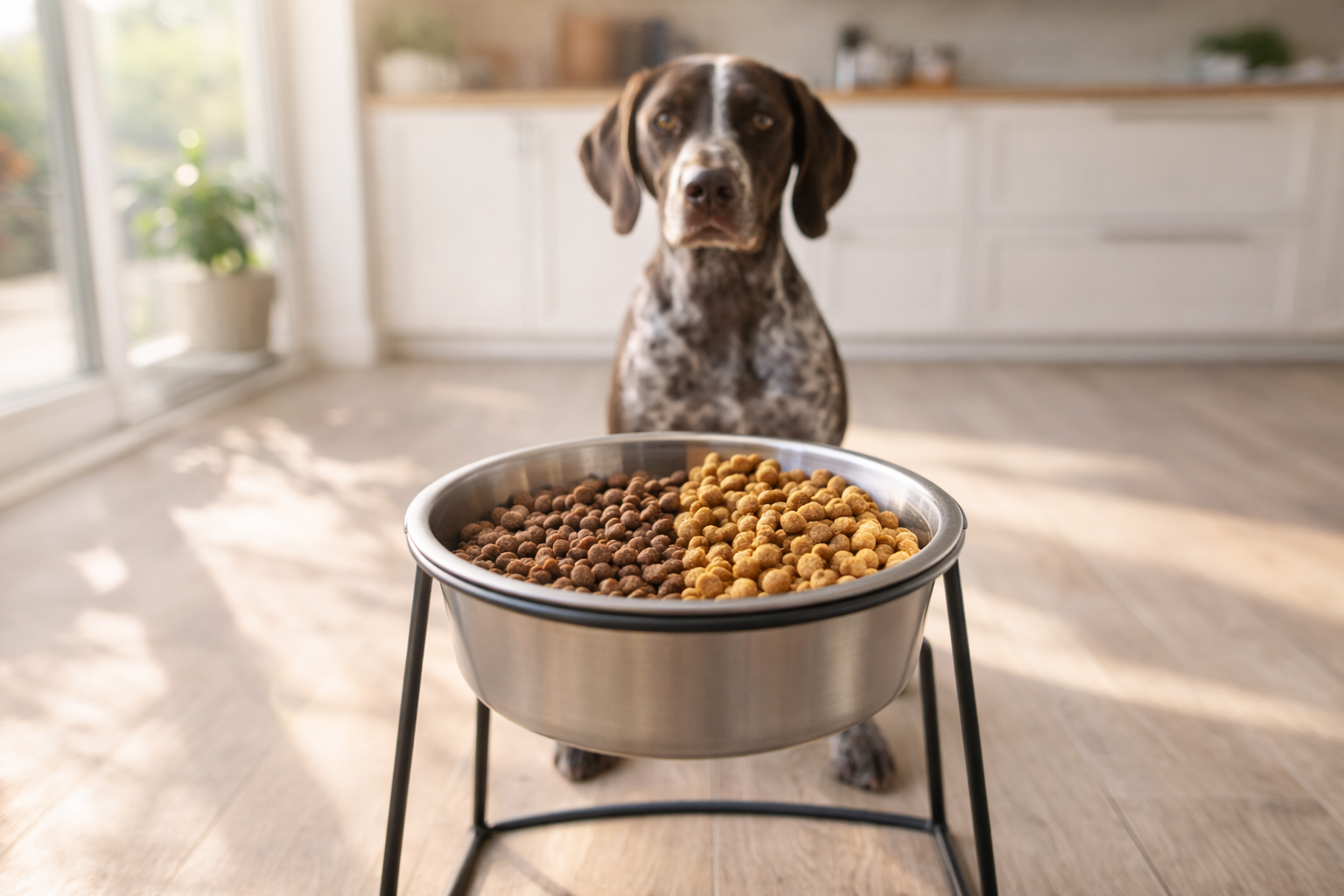
Switching your dog’s food sounds simple—open a new bag, fill the bowl, done. In reality, changing foods too quickly is one of the most common reasons dogs end up with upset stomachs, loose stools, or suddenly refusing to eat.
Whether you’re changing foods because your veterinarian recommended it, your dog’s life stage has changed, or you’re simply trying a new brand, how you transition matters just as much as what you’re feeding.
Here’s a practical, realistic guide to switching dog foods the right way—without unnecessary stress for you or your dog.
Why You Can’t Switch Dog Food Overnight
A dog’s digestive system adapts to what it eats regularly. Abruptly changing food doesn’t give the gut time to adjust, which can lead to:
- Diarrhea
- Vomiting
- Gas or bloating
- Decreased appetite
Even high-quality foods can cause problems if the transition is rushed. Slow changes allow the gut microbiome to rebalance and dramatically reduce the risk of digestive upset.
The Right Way to Transition Dog Food
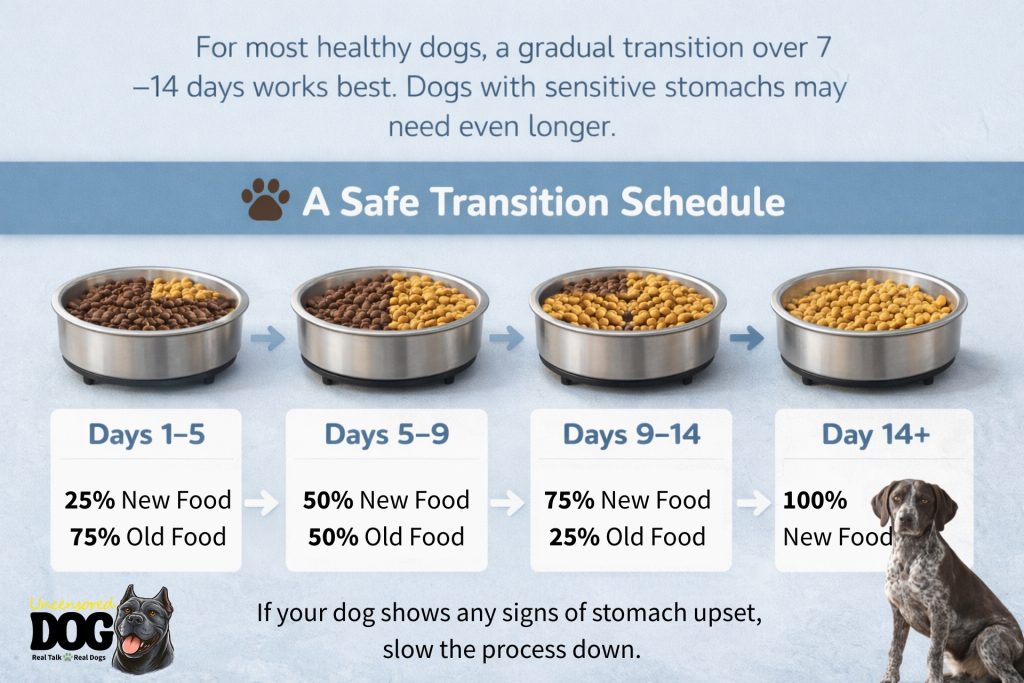
For most healthy dogs, a gradual transition over 7–14 days works best. Dogs with sensitive stomachs may need even longer.
A Safe Transition Schedule
- Days 1–5: 25% new food, 75% old food
- Days 5–9: 50% new food, 50% old food
- Days 9-14: 75% new food, 25% old food
- Day 14+: 100% new food
If your dog shows any signs of stomach upset, slow the process down. There’s no prize for switching fast—only consequences.
Watch Your Dog, Not the Calendar
Transition timelines are guidelines, not rules. Every dog processes food differently.
Slow down or pause the transition if you notice:
- Loose or watery stools
- Vomiting
- Loss of appetite
- Increased gas or discomfort
If problems persist even with a slow transition, it’s time to check in with your veterinarian. Some foods simply aren’t a good match for certain dogs.

Adverse Food Reactions: More Than Just “Allergies”
When dogs react poorly to food, it’s often labeled a “food allergy,” but that’s not always accurate. Veterinarians use the broader term adverse food reaction to describe a range of diet-related issues.
These reactions can show up as:
- Digestive symptoms: vomiting, diarrhea, nausea, appetite changes
- Skin symptoms: itching, redness, rashes, hair loss, ear issues
- Both at once
Because many conditions cause similar signs, proper diagnosis matters. If a food reaction is suspected, your vet may recommend an elimination diet using a prescription or hypoallergenic formula, followed by controlled reintroduction to identify problem ingredients. Alternatively, you can have your dog undergo allergy testing to identify which ingredients may be causing the issues.
The Proof Really Is in the Poop
One of the easiest ways to tell how your dog is handling a new food is to look at their stool.
Healthy stool is:
- Firm but not hard
- Easy to pick up
- Consistent in shape and color
Many vets reference fecal scoring charts, where a score of 3–4 is considered ideal. Consistently loose, watery, or overly hard stools are signs that something isn’t working—whether it’s the food itself or the transition speed.
If stool quality doesn’t normalize, don’t ignore it.
Choosing the Right Dog Food Isn’t One-Size-Fits-All
There is no single “best” dog food for every dog. Age, size, activity level, health conditions, and individual tolerance all play a role.
When evaluating foods:
- Look for “complete and balanced” on the label
- Confirm it meets standards set by the Association of American Feed Control Officials (AAFCO)
- Be cautious of marketing buzzwords that don’t reflect nutritional value
For owners overwhelmed by online claims and fear-based marketing, resources from the World Small Animal Veterinary Association can help separate nutrition facts from fiction.
And as always, your veterinarian—often guided by standards from the American Kennel Club and veterinary nutrition research—is your most reliable source for individualized advice.
Final Thoughts
Switching dog food doesn’t need to be stressful, but it does require patience. A slow, thoughtful transition protects your dog’s digestive health and helps you accurately evaluate whether a new food is truly a good fit.
Monitor appetite, behavior, and stool quality closely during the process—and don’t be afraid to slow things down or ask for professional guidance.
A successful food switch isn’t about speed.
It’s about setting your dog up to feel their best.
Have you ever switched foods too fast—or found one that worked perfectly for your dog? Drop your experience or questions in the comments to help other dog owners navigate the process. 🐾
Disclaimer
The information provided in this article is intended for general educational purposes only and should not replace guidance from a veterinarian, certified dog trainer, behavior consultant, or other qualified dog professional. Every dog and situation is unique—professional support is always recommended when addressing health, behavior, or training concerns.
Continue Learning with Us
Want to go deeper? Uncensored Dog members get access to premium articles, training plans, videos, and tools designed for real-life dog training and everyday challenges.