


Eggs are a kitchen staple for many of us, so it’s only natural to wonder if they’re safe—or even healthy—for dogs. The short answer is yes, dogs can eat eggs, but how they’re prepared and how much you feed matters more than most people realize.
Here’s a clear, no-BS breakdown of eggs for dogs: the benefits, the risks, and how to feed them safely.
Are Eggs Good for Dogs?
Yes—when fed properly, eggs can be a nutrient-dense addition to your dog’s diet. Unless your pet has a pre-existing health condition like acute pancreatitis or diabetes.
Eggs are a highly digestible protein source and provide a range of essential nutrients that support overall canine health.
Nutritional Value of Eggs for Dogs
Eggs contain:
- High-quality protein (supports muscle and tissue repair)
- Amino acids (essential building blocks for health)
- Vitamin A (supports immunity, bone health, vision, and reproduction.)
- Riboflavin (B2) and Vitamin B12 (cobalamin) (boosts enzyme function)
- Iron (oxygen transport in the blood)
- Selenium (antioxidant support)
- Thiamine (supports energy production and healthy nervous system function.)
- Omega-3 fatty acids (skin, heart, and kidney health)
Because of this, eggs are often recommended for dogs needing extra calories, protein, or coat support—as long as they’re fed appropriately.

Can Dogs Eat Cooked Eggs?
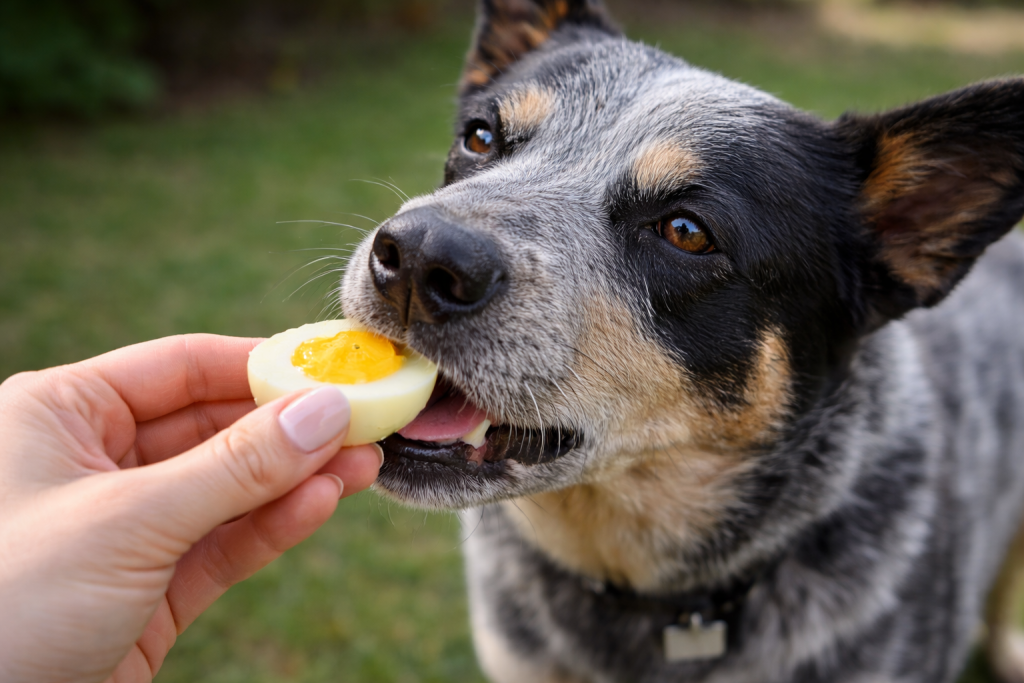
Yes—and this is the safest option.
Plain cooked eggs (boiled, scrambled, or fried without butter, oil, salt, or seasoning) are the best way to feed eggs to dogs. Cooking eliminates the risk of bacteria like salmonella and avoids nutrient absorption issues associated with raw egg whites.
Best options:
- Hard-boiled eggs
- Scrambled eggs (plain)
- Soft-cooked eggs with fully cooked whites
Can Dogs Eat Raw Eggs?
This is where things get a little more nuanced.
Raw Egg Yolks: Generally Safe
Raw egg yolks are rich in:
- Healthy fats
- Fat-soluble vitamins (A, D, E)
- Biotin (important for skin and coat)
When fed occasionally and sourced from clean, high-quality eggs, raw yolks are generally considered safe for healthy dogs.

Raw Egg Whites: Not Recommended
Raw egg whites contain a protein called avidin, which binds to biotin and prevents its absorption. Over time, feeding raw egg whites can contribute to a biotin deficiency, potentially leading to:
- Skin and coat issues
- Brittle hair
- Metabolism issues
- Cellular issues
- Digestive issues
- Poor overall condition
Raw egg whites also carry a higher risk of salmonella exposure, especially for puppies, seniors, or immunocompromised dogs.
Ultimately: Before feeding raw eggs to your dog, talk to your vet.
How Many Eggs Can Dogs Eat Per Day?
Eggs should be treated as a supplement or topper, not a dietary staple.
General guidelines:
- Small dogs: 1–2 eggs per week (which can be broken up so they get a small portion daily)
- Medium dogs: Up to 3 eggs per week (which can be broken up so they get a small portion daily)
- Large dogs: Up to 1 egg per day
Eggs are calorie-dense, so too many can contribute to weight gain or unbalance a complete diet.
When in doubt, moderation wins.
Can Dogs Eat Eggshells?
Yes—with important caveats. Plus there are much easier ways to get dogs the nutrients that egg shells may provide.
Eggshells are a natural source of calcium, which supports bone and dental health. However:
- Shells must be cleaned, dried, and finely ground
- Large pieces can be a choking hazard and the sharp pieces can cause damage to gums, throat, or internal organs.
- Too much calcium can disrupt nutritional balance
Eggshell powder is sometimes used in homemade dog food, but it should be added carefully and ideally under veterinary guidance.

Is the Egg Membrane Good for Dogs?
Surprisingly—yes.
The thin membrane between the shell and the egg contains:
- Collagen
- Glucosamine
- Chondroitin Sulfate
- Hyaluronic acid
These compounds support joint health, and skin/coat condition, making eggshell membrane a popular ingredient in joint supplements. Small amounts from crushed shells are generally safe, but it’s not a miracle cure—just a helpful bonus.

Can Dogs Be Allergic to Eggs?
Yes, dogs can be allergic or sensitive to eggs.
Signs of an egg allergy may include:
- Itchy skin or ears
- Digestive upset (vomiting or diarrhea)
- Excessive licking or scratching
If your dog has never eaten eggs before, introduce them slowly and watch for any reactions. If symptoms appear, stop feeding eggs and consult your veterinarian.
Final Thoughts: Are Eggs Worth Adding to Your Dog’s Diet?
Eggs can be a healthy, affordable, and nutritious treat for many dogs when fed properly. Cooked eggs are the safest option, raw yolks can be okay in moderation, and raw egg whites are best avoided.
As with most things in dog nutrition, balance matters more than trends.
If you’re ever unsure—especially if your dog has health issues or dietary sensitivities—your vet is always the best resource.
Do you feed eggs to your dog? Cooked, raw, or never at all? Drop your experience or questions in the comments—your insight might help another dog owner. 🐾
References: https://www.webmd.com/pets/dogs/can-dogs-eat-eggs and https://www.akc.org/expert-advice/nutrition/can-dogs-eat-eggs/
Disclaimer
The information provided in this article is intended for general educational purposes only and should not replace guidance from a veterinarian, certified dog trainer, behavior consultant, or other qualified dog professional. Every dog and situation is unique—professional support is always recommended when addressing health, behavior, or training concerns.
Continue Learning with Us
Want to go deeper? Uncensored Dog members get access to premium articles, training plans, videos, and tools designed for real-life dog training and everyday challenges.