


Adopting a dog is often presented as a simple, feel-good decision. Walk into a shelter, fall in love, bring a dog home, and everyone lives happily ever after.
Real life is rarely that simple.
Adoption can be an incredible experience—but it’s not the right choice for every person, every household, or every stage of life. Deciding whether adoption is right for you requires honesty, preparation, and a willingness to look beyond emotion alone.
This isn’t about discouraging adoption. It’s about helping you make a choice that sets both you and the dog up for long-term success.
Why Adoption Appeals to So Many People
For many dog lovers, adoption aligns deeply with their values. The desire to help a dog in need, give a second chance, or avoid contributing to irresponsible breeding is powerful—and admirable.
Adoption can offer:
- The chance to help a displaced dog
- A sense of purpose and compassion
- Adult dogs who may already be housetrained
- Lower initial costs compared to purchasing a puppy
- The opportunity to match with a dog rather than raise one from scratch
For the right home, adoption can be life-changing in the best possible way.
But good intentions alone are not enough.
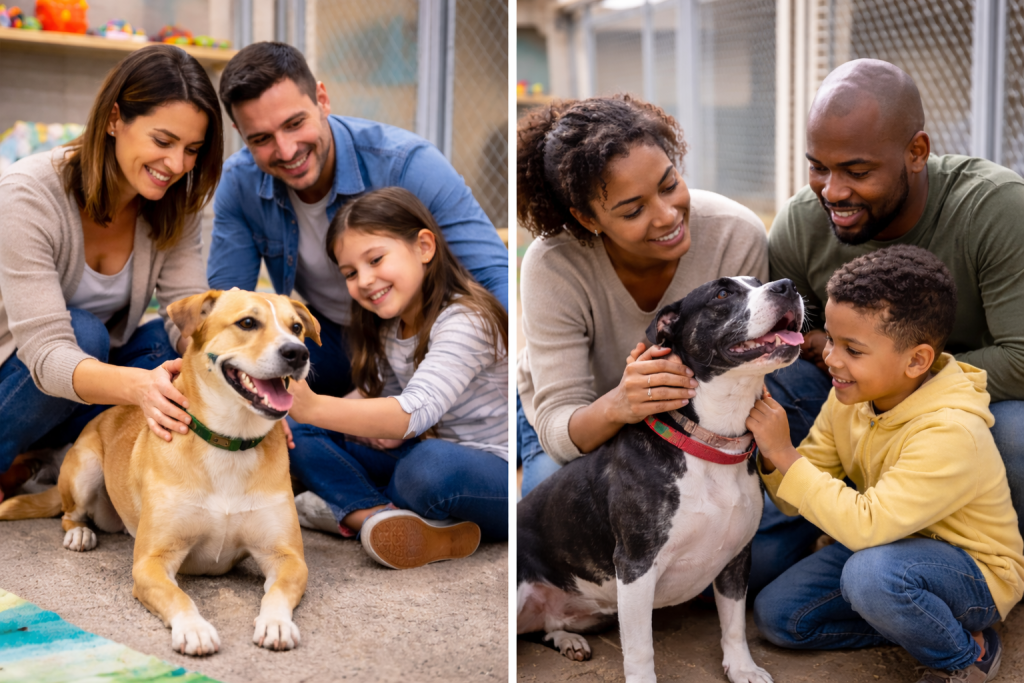
Understanding the Realities of Shelter and Rescue Dogs
Before adopting, it’s important to understand what adoption often includes—beyond the heartwarming stories.
Many shelter dogs come with unknowns, including:
- Genetic background
- Early socialization experiences
- Health predispositions
- Trauma, neglect, or inconsistent care
- Learned behaviors that developed as coping mechanisms
Shelters do their best to evaluate dogs, but behavior in a shelter environment is not always an accurate reflection of behavior in a home. Stress can suppress or intensify traits that only emerge once the dog settles in.
This doesn’t make shelter dogs “problem dogs.”
It makes them dogs who need understanding, patience, and often training support.

Questions You Should Ask Yourself Honestly
Before choosing adoption, ask yourself these questions—without judgment.
1. How Comfortable Am I With Uncertainty?
Adoption often means accepting unpredictability.
Ask yourself:
- Can I handle unexpected behavioral challenges?
- Am I prepared for a dog whose needs may change over time?
- How would I respond if the dog struggles with anxiety, reactivity, or fear?
If unpredictability causes significant stress for you, adoption may feel overwhelming rather than rewarding.
2. What Is My Experience Level With Dogs?
Experience matters.
First-time dog owners can absolutely adopt—but they should be realistic about the learning curve. Some dogs require advanced management, consistent training, or professional support that inexperienced owners may not anticipate.
Ask yourself:
- Have I handled behavioral challenges before?
- Do I know how to read canine body language?
- Am I open to ongoing education and support?
3. Do I Have the Time and Emotional Capacity?
Adopted dogs often need:
- Decompression time
- Consistent routines
- Slow introductions to people and environments
- Training to build confidence and skills
This requires patience—not just time on a calendar, but emotional bandwidth.
Ask yourself:
- Can I stay calm through setbacks?
- Am I willing to move at the dog’s pace?
- Do I have time for training and adjustment?
4. What Does My Household Look Like—Really?
Your lifestyle matters more than your intentions.
Consider:
- Children and their ages
- Other pets
- Visitors and activity level
- Work schedule and travel
- Living space and restrictions
Some dogs thrive in busy environments. Others need calm, predictable homes. Adoption works best when the dog’s needs align with your reality—not your ideal.
The Importance of Support Systems
Successful adoption rarely happens in isolation.
Ask yourself:
- Do I have access to a qualified trainer or behavior professional?
- Can I afford professional help if needed?
- Is my household aligned and supportive of this decision?
Adopting without a support plan increases the risk of burnout and rehoming—something no one wants.
When Adoption Is Often a Great Fit
Adoption may be right for you if:
- You’re flexible and patient
- You’re comfortable with some unknowns
- You have time to invest in training and adjustment
- You value the process as much as the outcome
- You’re open to professional guidance if challenges arise
In these situations, adoption can be deeply fulfilling and successful.
When Adoption Might Not Be the Best Choice
Adoption may not be the best fit if:
- You need predictability in temperament or health
- You have limited time or emotional capacity
- You require specific traits for work, sport, or family needs
- You’re not in a position to manage behavioral challenges
- Your household requires a very specific type of dog
Choosing a responsibly bred dog in these cases is not a failure—it’s a thoughtful decision.
Adoption Is a Commitment, Not a Rescue Mission
One of the most important mindset shifts is this:
Adoption is not about saving a dog.
It’s about committing to one.
Dogs don’t need heroes. They need prepared, stable, realistic humans who are ready to meet their needs long after the excitement fades.
Final Thoughts
Adopting a dog can be an incredible experience—but only when it’s approached with honesty, preparation, and realistic expectations.
There is no shame in recognizing your limits.
There is no virtue in choosing a path that doesn’t fit your life.
There is responsibility in choosing thoughtfully.
The best decision is the one that leads to a dog staying in a loving, stable home for life—however that dog comes into it.
At Uncensored Dog, we believe dogs deserve more than good intentions. They deserve informed, intentional choices.
Disclaimer
The information provided in this article is intended for general educational purposes only and should not replace guidance from a veterinarian, certified dog trainer, behavior consultant, or other qualified dog professional. Every dog and situation is unique—professional support is always recommended when addressing health, behavior, or training concerns.
Continue Learning with Us
Want to go deeper? Uncensored Dog members get access to premium articles, training plans, videos, and tools designed for real-life dog training and everyday challenges.